What a traditional healer does
A traditional healer works within a body of knowledge carried from one generation to the next: an understanding of plants, of ceremony, and of the situations people find themselves in. In Uganda that knowledge is local and specific. It belongs to particular families and particular places, and it is learned over years rather than taken from a book.
In practice the work is less dramatic than the word "healer" sometimes suggests. Most of a traditional healer’s day is spent listening. Someone arrives carrying a situation — a marriage that has gone quiet, a business that will not move, a child who has stopped doing well at school, a journey that keeps falling through — and describes it in their own words. The healer asks questions, and only then is anything suggested.
What follows depends on the person and the matter. It may involve traditional preparations made from plants gathered fresh. It may involve ceremony. Often it involves nothing more than a long conversation and advice on what to do next.
Who comes for consultation
People arrive with very ordinary difficulties. The concerns brought to Dr Salongo Hamuza are largely the concerns of everyday life, and visitors come from every part of Uganda and from many different backgrounds and faiths.
- Marriages and relationships that have become difficult, distant or uncertain
- Households that have lost their peace, or families in long disagreement
- Businesses and trades that have stalled, and work that will not come
- People hoping for progress in their career, including in uniformed services
- Couples carrying the weight of trying to conceive
- Children struggling at school, or falling behind for reasons nobody can explain
- Travel and documentation that keeps failing at the last step
- Property that has gone missing, and thefts that were never resolved
- Musicians, performers and entertainers trying to establish themselves
How a consultation works
There is no form to complete and nothing to prepare beforehand. The process is deliberately simple, because most people making contact are already carrying enough.
- You telephone or send a WhatsApp message and describe, in your own words, what you are carrying.
- Dr Salongo Hamuza listens to the situation in full and asks whatever he needs to understand it.
- Guidance is given according to traditional practice, and what it involves is explained to you plainly.
- The decision is yours. You are free to accept the guidance, to consider it, or to leave it.
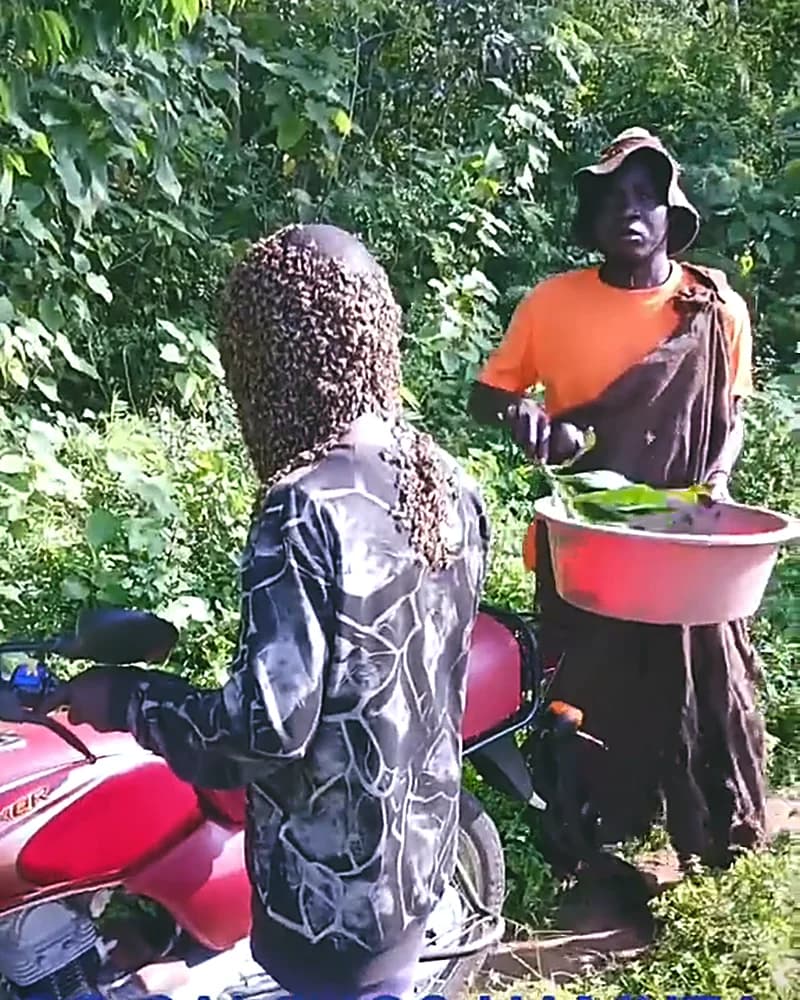
Traditional Ceremony in the Open Field — filmed during traditional work in Uganda.
Where traditional practice ends and medical care begins
This distinction matters more than anything else on this page, and it is stated here rather than buried in a footer.
Traditional and spiritual consultation is rooted in traditional belief and practice. It is not medical diagnosis and it is not medical treatment. It does not replace a doctor, a hospital, a clinic or prescribed medication, and it should never be used as a reason to delay or abandon medical care.
Anyone experiencing a serious physical or mental-health condition should seek qualified healthcare. Where a matter that arrives at a consultation plainly belongs with a doctor, a hospital, the police, a teacher or a lawyer, Dr Salongo Hamuza says so directly. Being told honestly that something is outside traditional practice is a legitimate outcome of a consultation.
No specific result, cure, pregnancy, recovery, promotion or financial gain is promised or guaranteed. Individual experiences differ from person to person.
Traditional practice alongside modern healthcare
People sometimes arrive expecting to be asked to choose between traditional practice and a hospital. They are not. The two answer different questions, and treating them as rivals helps nobody.
A hospital diagnoses and treats illness. Traditional consultation deals with the situations, relationships and circumstances a person is carrying, within a cultural framework they already understand. Someone can quite reasonably continue their prescribed treatment and also sit down for a traditional consultation, and many do.
What is never appropriate is stopping medical treatment because of something said in a traditional consultation. That is not asked for here.
What to look for in a traditional healer
Anyone can describe themselves as a traditional healer, which is precisely why it is worth knowing what to pay attention to before you travel to see one.
- Someone who listens first and does not tell you what your problem is before you have described it
- Someone who explains what a consultation will involve, in words you understand, before it begins
- Someone who is honest about limits, and who will tell you when a matter belongs with a doctor or the authorities
- Someone who makes no guarantees, because no honest practitioner can make them
- Someone who will not ask you to do anything unlawful, or anything that would cause harm to another person
- Someone whose work you can actually see, rather than only read about
Consulting Dr Salongo Hamuza
Dr Salongo Hamuza is a professional traditional healer from Uganda offering traditional and spiritual consultation. He receives people by telephone and by WhatsApp, and visitors are received by arrangement.
Consultations are private. Nothing you describe is published, and no name, photograph or account appears anywhere on this website without permission given first. The videos and photographs published here were shared with the agreement of the people in them.